

Pas de salaire renseigné
Interaction Between Energetic Particle Driven Instabilities And Microturbulence In Tokamak Plasmas H/F CEA
- Cadarache - 13
- Stage
- 6 mois
- Bac +5
- Industrie high-tech • Telecom
- Exp. - 1 an
- Exp. 1 à 7 ans
Les missions du poste
Tokamak plasmas are nonlinear systems far from thermodynamic equilibrium, characterized by a broad range of interacting instabilities that span from macroscopic oscillations, comparable to the device size, down to microturbulent fluctuations smaller than the ion Larmor radius. These instabilities arise from the large free energy stored in plasma gradients typical of the tokamak configuration.The presence of energetic ions, produced either by fusion reactions or auxiliary heating systems, adds further complexity. Such particles can resonate with plasma waves, exciting kinetic instabilities on meso- to macro-scales and enhancing cross-scale couplings. Both microturbulence and energetic particle (EP)-driven instabilities negatively affect plasma performance: the former drives anomalous transport of heat and particles, while the latter can induce radial redistribution or losses of EPs, limiting their contribution to plasma heating.
Traditionally, these processes have been studied separately, assuming that their characteristic scales were too distant to interact. However, recent experiments and simulations have shown that these scales can couple through zonal flows, i.e. axisymmetric perturbations of the electrostatic potential that regulate turbulence. In some cases, EP-driven instabilities can even amplify zonal flows, unexpectedly reducing turbulence and improving confinement. Understanding these nonlinear mechanisms is crucial for optimizing performance in future fusion reactors.
This project aims to explore the interaction between EP-driven instabilities and microturbulence using the Gyrokinetic Toroidal Code (GTC), a global particle-in-cell (PIC) code well suited for studying multi-scale phenomena in realistic tokamak geometries.
The work will proceed in two main stages. In the first, the student will contribute to extending GTC to handle multiple energetic particle species, instead of a single one. This development will provide both experience with the code structure and insight into the physics of isolated ITG turbulence and EP-driven Alfvénic modes. It will also enable more realistic modeling of burning plasmas, such as those expected in ITER, where multiple EP species coexist.
In the second stage, nonlinear simulations including both EP-driven instabilities and microturbulence will be carried out for selected JET discharges, where enhanced confinement has been experimentally observed. These studies will allow a systematic investigation of cross-scale couplings and their role in transport regulation.
While ambitious for a six-month internship, this project lays the foundation for a Ph.D. within the ANR JCJC SFIT project, focusing on nonlinear multi-scale plasma dynamics. The ultimate goal is to deepen the understanding of the interplay between energetic particle physics and microturbulence, and to identify operational regimes that optimize plasma confinement in future fusion devices such as ITER.
This six-month Master's thesis project is intended for a highly motivated student with a solid background in physics, ideally with prior knowledge of plasma physics and magnetic confinement fusion.
The candidate should possess strong analytical skills and a particular talent for computational simulations, as the project involves advanced gyrokinetic modeling and possibly code development. An interest in high-performance computing will be a valuable asset. The ability to work independently while collaborating within an international research team is essential.
The internship is open to students enrolled in Master's programs in physics, plasma physics, or nuclear engineering, or similar.
The English language, both written and spoken, is required, as most of the communication and, documentation can be in English.
- Télétravail jusqu’à 3 jours par semaine
- 52 jours de congés/RTT
- Possibilité d’aménagement du temps de travail
- Formation personnalisée
- Restauration d’entreprise
- Offre de transport interne et prise en charge Navigo and co,
- Mutuelle d’entreprise avantageuse
- CE (aides vacances, loisirs, frais de garde, scolarité des enfants etc
Les étapes de recrutement
Les étapes de recrutement peuvent varier selon l'offre à laquelle vous postulez.
-
Dépôt de CV via notre site carrière
-
Préqualification téléphonique
-
Entretiens et évaluation avec manager et RH
-
Négociation salariale et contrat de travail
-
Embauche et intégration
-
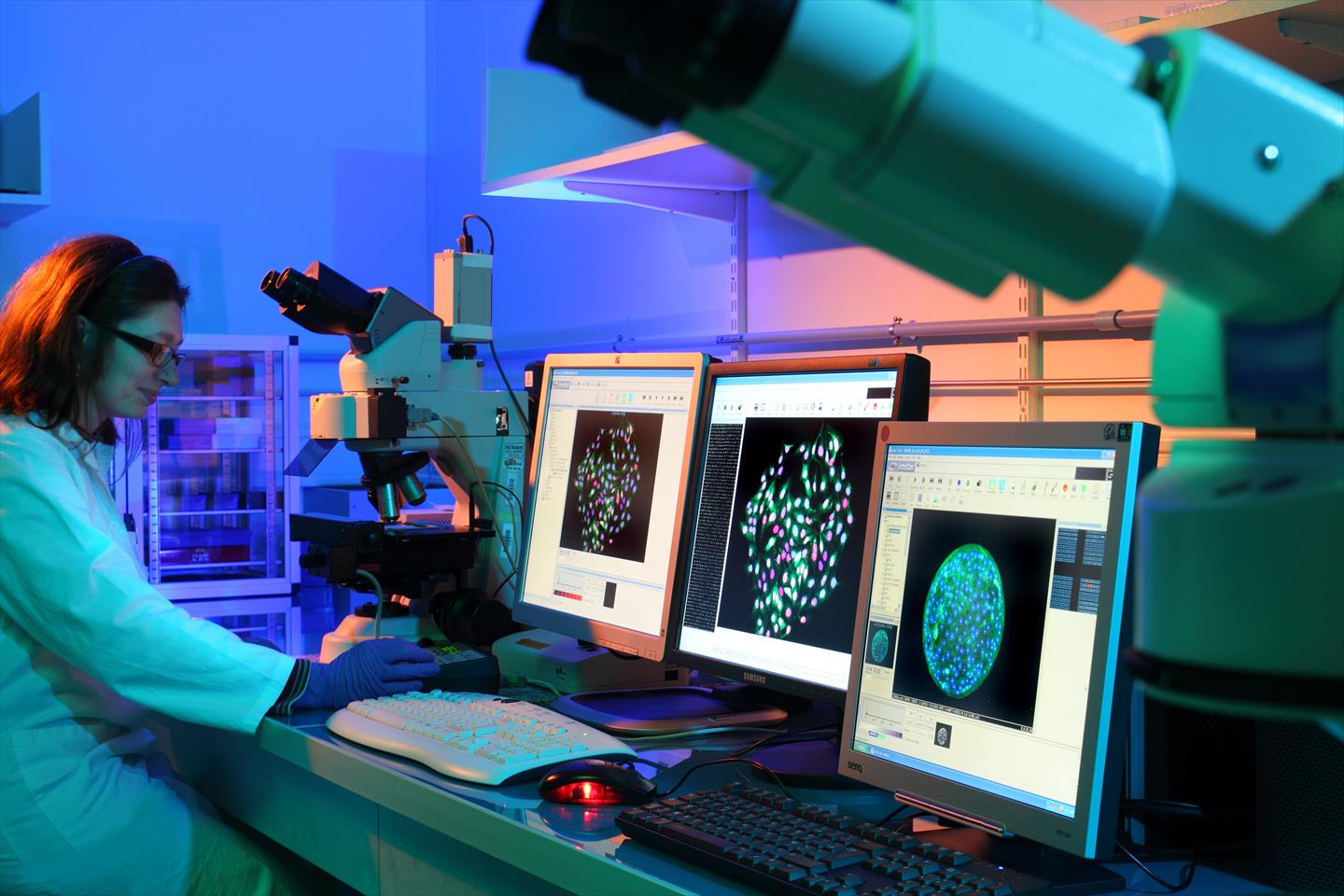
CEA en images
Publiée le 18/12/2025 - Réf : 2025-38755
Créez une alerte
Interaction Between Energetic Particle Driven Instabilities And Microturbulence In Tokamak Plasmas H/F
- Cadarache - 13
- Stage
Pour les postes éligibles :
Télétravail partiel
Finalisez votre candidature
sur le site du
recruteur
Créez votre compte pour postuler
sur le site du
recruteur !
sur le site du recruteur
sur le site du recruteur !
Recherches similaires
- Job Analyste de signaux électromagnétiques
- Job Informatique
- Job Marseille
- Job Aix-en-Provence
- Job Salon-de-Provence
- Job Arles
- Job Aubagne
- Job La Ciotat
- Job Martigues
- Job Istres
- Job Miramas
- Job Vitrolles
- Job Développeur
- Job Technicien support informatique
- Job Développeur Java
- Job DevOps
- Job Administrateur des systèmes et réseaux
- Entreprises Informatique
- Offre de stage Informatique
- Entreprises Analyste de signaux électromagnétiques
- Entreprises Cadarache
- Offre de stage Bouches-du-Rhône
- Offre de stage Cadarache
- Offre de stage Analyste de signaux électromagnétiques
- Offre de stage Analyste de signaux électromagnétiques Cadarache
- Job Débutant sans expérience
- Job Sans expérience
- Job Débutant
- Job Numérique
- Job Etat
- CEA Cadarache
- CEA Analyste de signaux électromagnétiques
- Stage CEA
Testez votre correspondance
Chargement du chat...
{{title}}
{{message}}
{{linkLabel}}