Les missions du poste
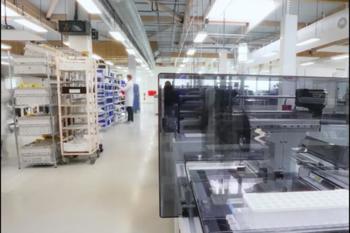
Dans le cadre de cette thèse, nous visons à développer un nouveau robot de recherche autonome mis en oeuvre dans le cadre du projet national DIADEME. Le doctorant participera à la conception et à la mise en oeuvre du robot, appliqué à de nouveaux matériaux oxydes
pour le photovoltaïque. Son rôle principal consistera à développer des parties spécifiques du développement du robot et à valider leur intégration sur l'ensemble du dispositif. Plus spécifiquement, son sujet concernera l'étude de matériaux oxydes pour la collecte des électrons./trous au sein de dispositifs photovoltaïques. Les caractérisations considérées incluront la diffraction des rayons X, l'ellipsométrie, la photoluminescence. L'objectif est que le robot puisse (seul) converger vers une formulation plus performante pour l'application visée. Materials Acceleration Platforms are new devices which allow developing innovative materials in a very efficient way. Their philosophy is based either on the parallelisation of the synthesis/characterization process or on the automated exploration of composition space through autonomous robots.
The autonomous research approach: with only few examples of recent original sets-up worldwide, an autonomous research device also screens efficiently a very wide range of compositions, but the way it explores the composition space is not imposed by the researcher but is optimized as soon as the experiment progresses and provides new data. In this case, the materials research process is mainly automatized. The optimization approach also supposes to define carefully target properties with their intrinsic complexity for the final application. The coupling of experiments to DFT calculations through DIADEM simulations platforms can also constitute a valuable enrichment of the optimization process.
Withtin the National Project DIADEM, we have obtained some funding to develop an Autonomous Research Platform. Such a Platform is currenlty being implemented through an existing robot and aditionnal modules developed locally. It will be here extended to photovoltaic application by incorporating a new characterisation technique, namely the Time-Resolved PhotoLuminescence. The objectives of the PhD thesis is to develop the self-driving laboratory for the optimisation of current-collector materials in photovoltaic devices. The ExploraMat platform has been implemented in the framework of the DIADEM PEPR program. The thesis will extend the possibilities of this platform to explore materials for photovoltaic panels. The development of extraction layers for PV cells suppose to explore a wide range of compositions and preparation conditions. During the proposed PhD, we will explore the syudy of original oxide materials focusing on their ability to extract holes or electrons from the absorbing layer of the PV cell. This supposes that a fine tuning of band alignment and materials properties (conductivity, transparency) is realised playing on material composition and layer quality.
Le profil recherché
Des compétences dans les domaines suivant seront appréciées, sans être obligatoires:
- dépôt de couches par voie chimique
- caractérisation de couches minces
- physique du photovoltaïque
- mesures électriques
- python
Bienvenue chez Doctorat.Gouv.Fr
automatisée de l'espace de composition par des robots autonomes.
Publiée le 17/04/2026 - Réf : 5520d66c3aa979d8d076344aec48c5c8